Air suit
Swords: the Air suit
Swords are the Air suit — thought, conflict, and hard truth. Swords isn't automatically the "bad" suit; it's the mental one, covering everything from a clarifying idea to an honest but painful conversation. A Swords-heavy spread usually points to the mind: a decision that needs clear thinking, a truth being avoided, or a conflict that has to be faced directly.
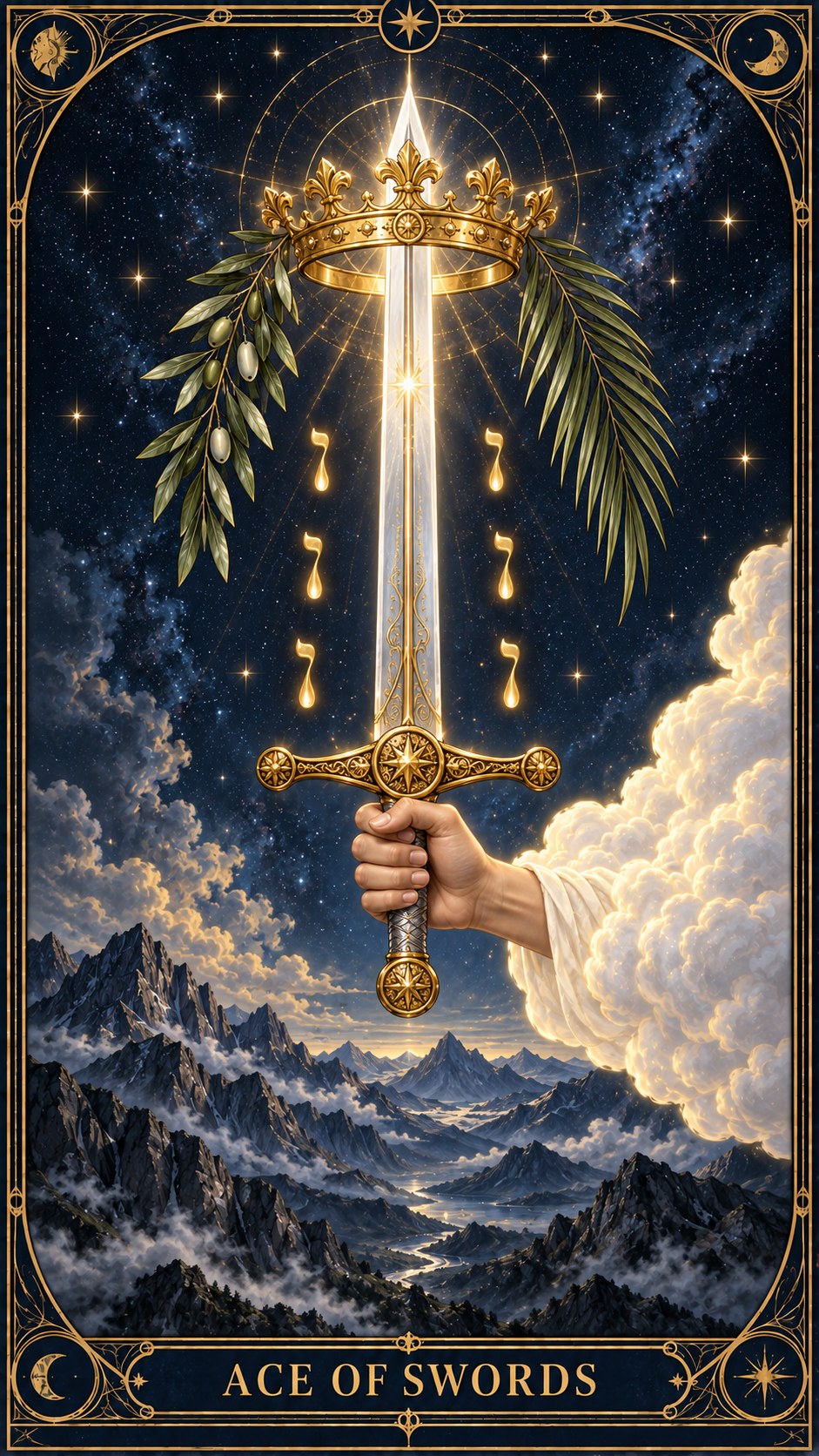
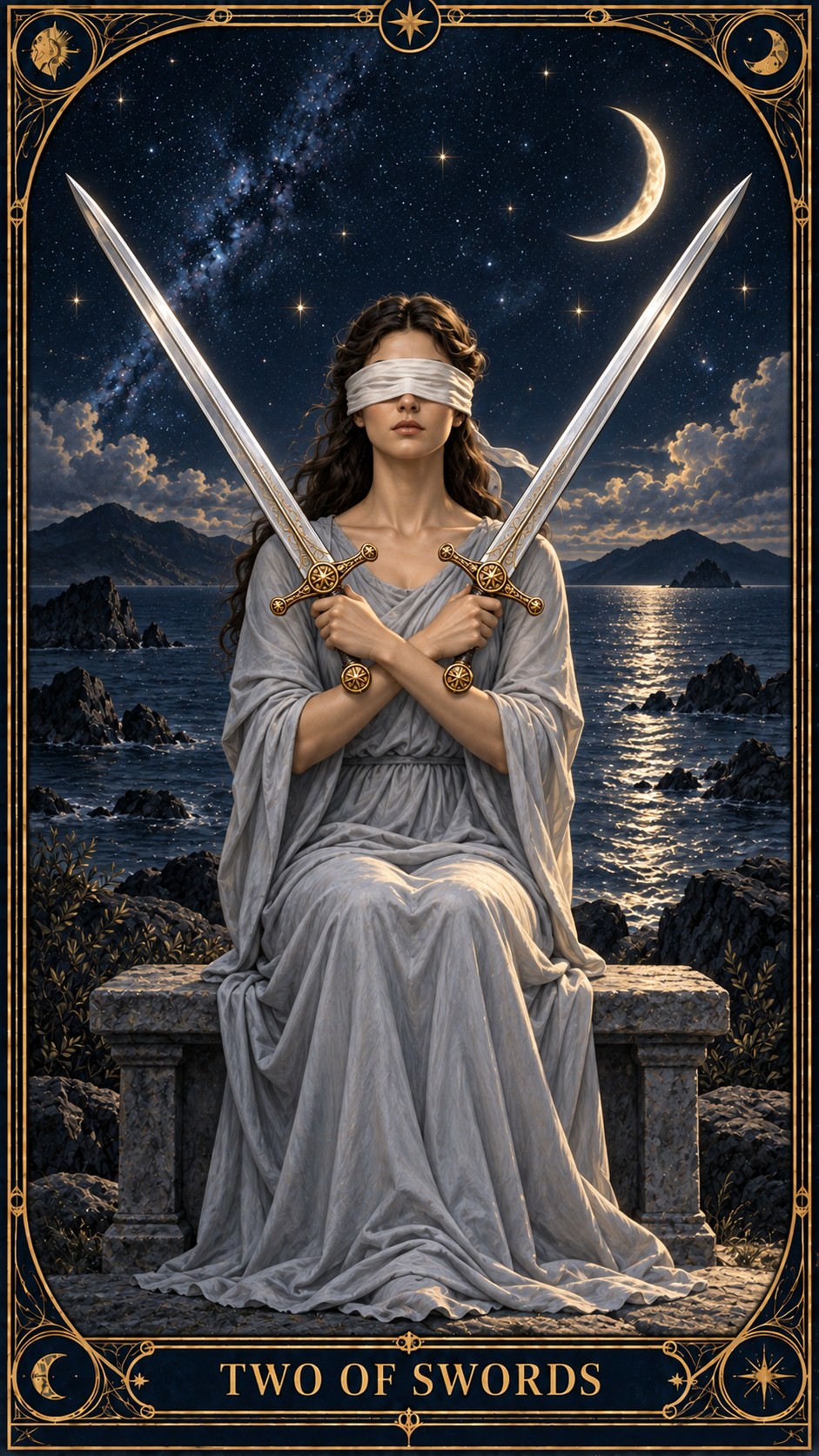
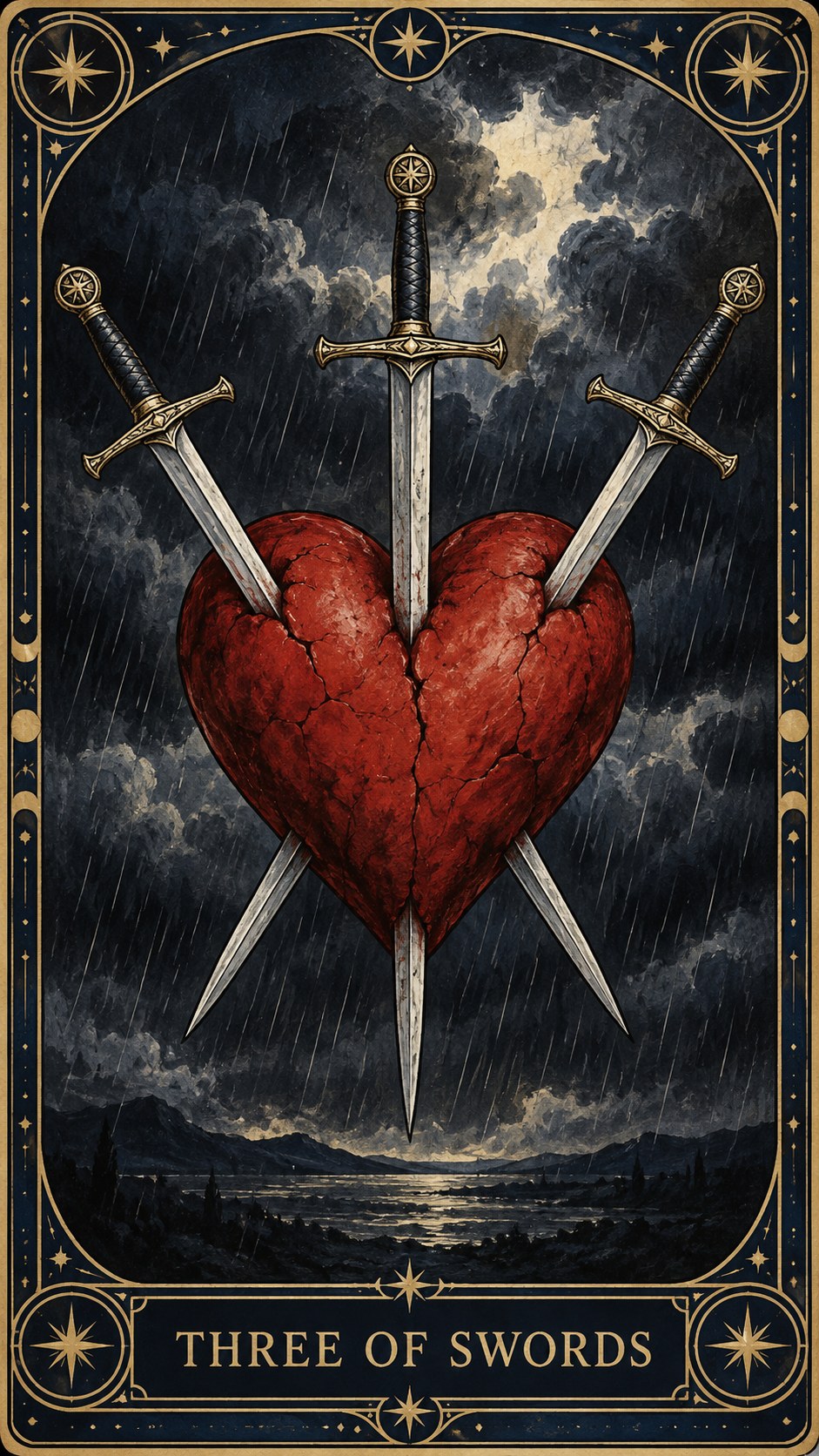
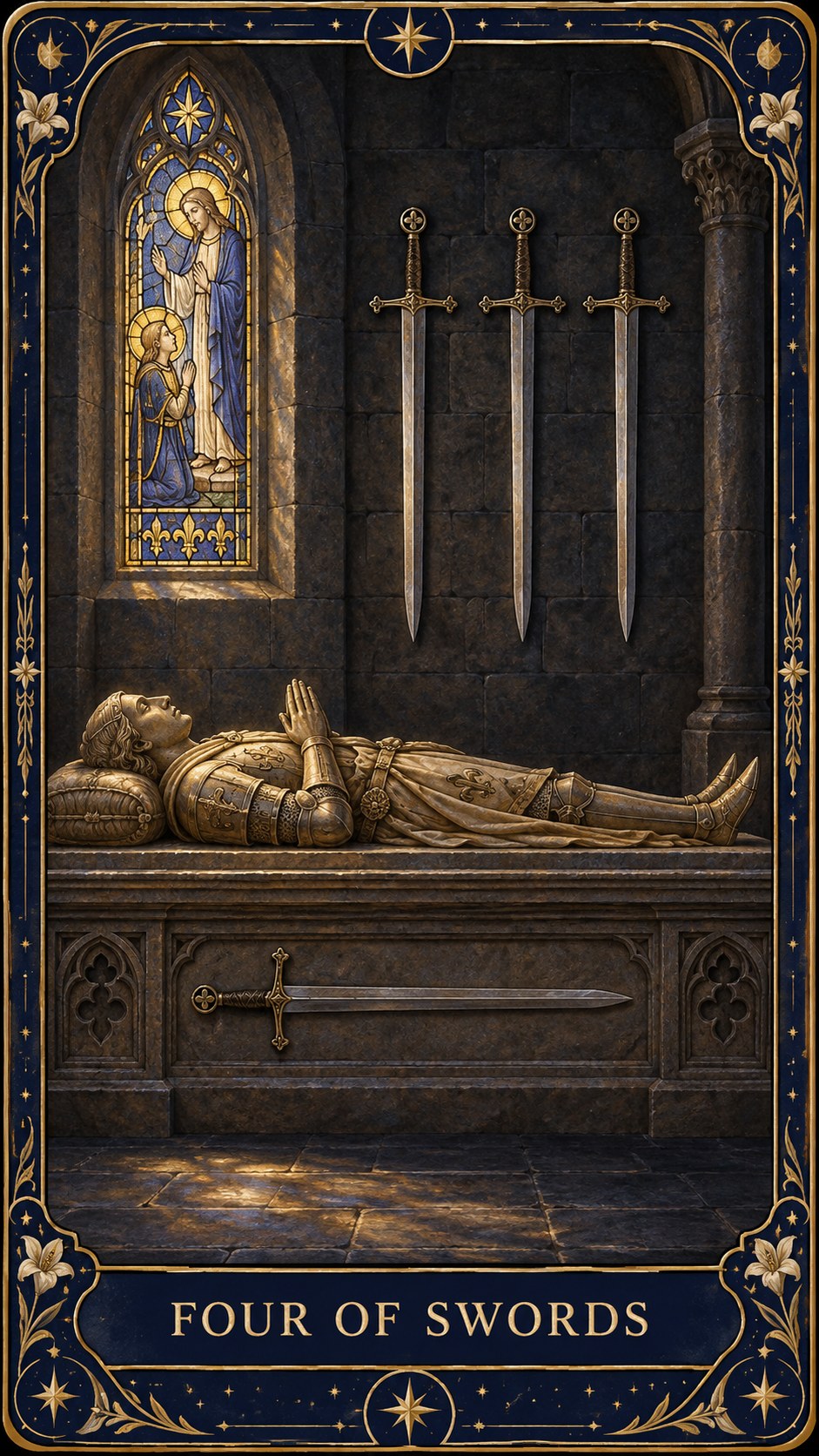
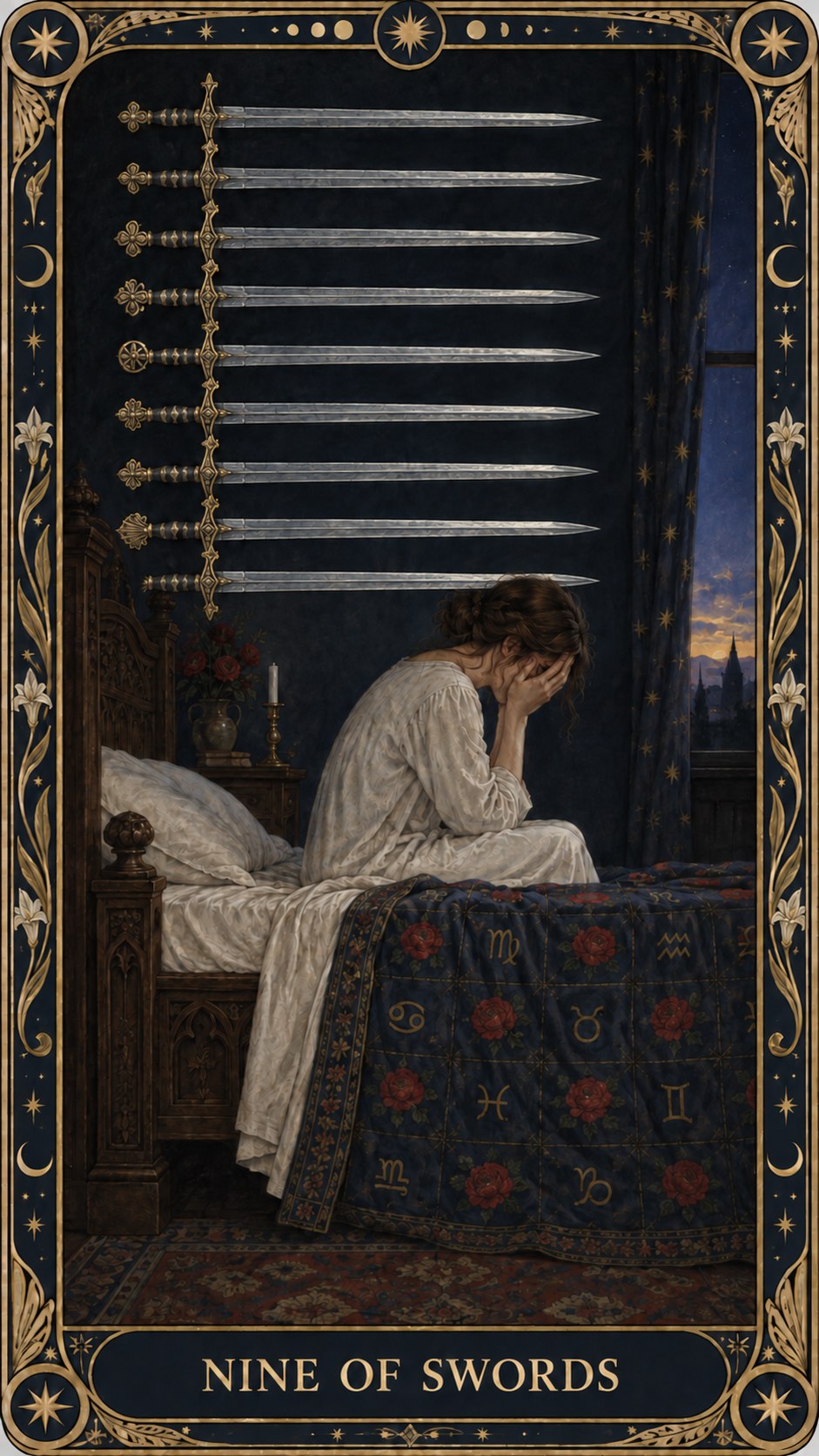
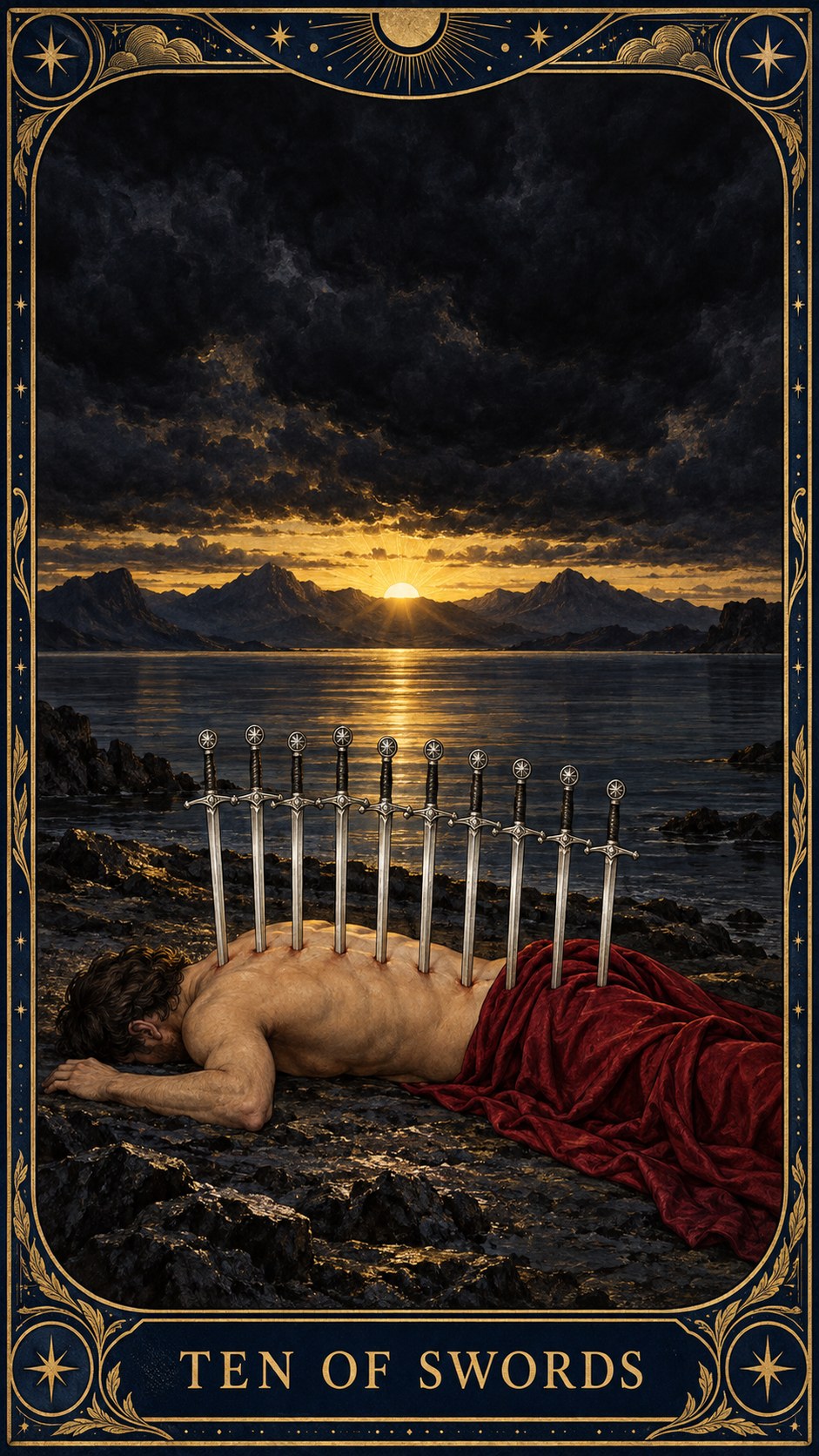
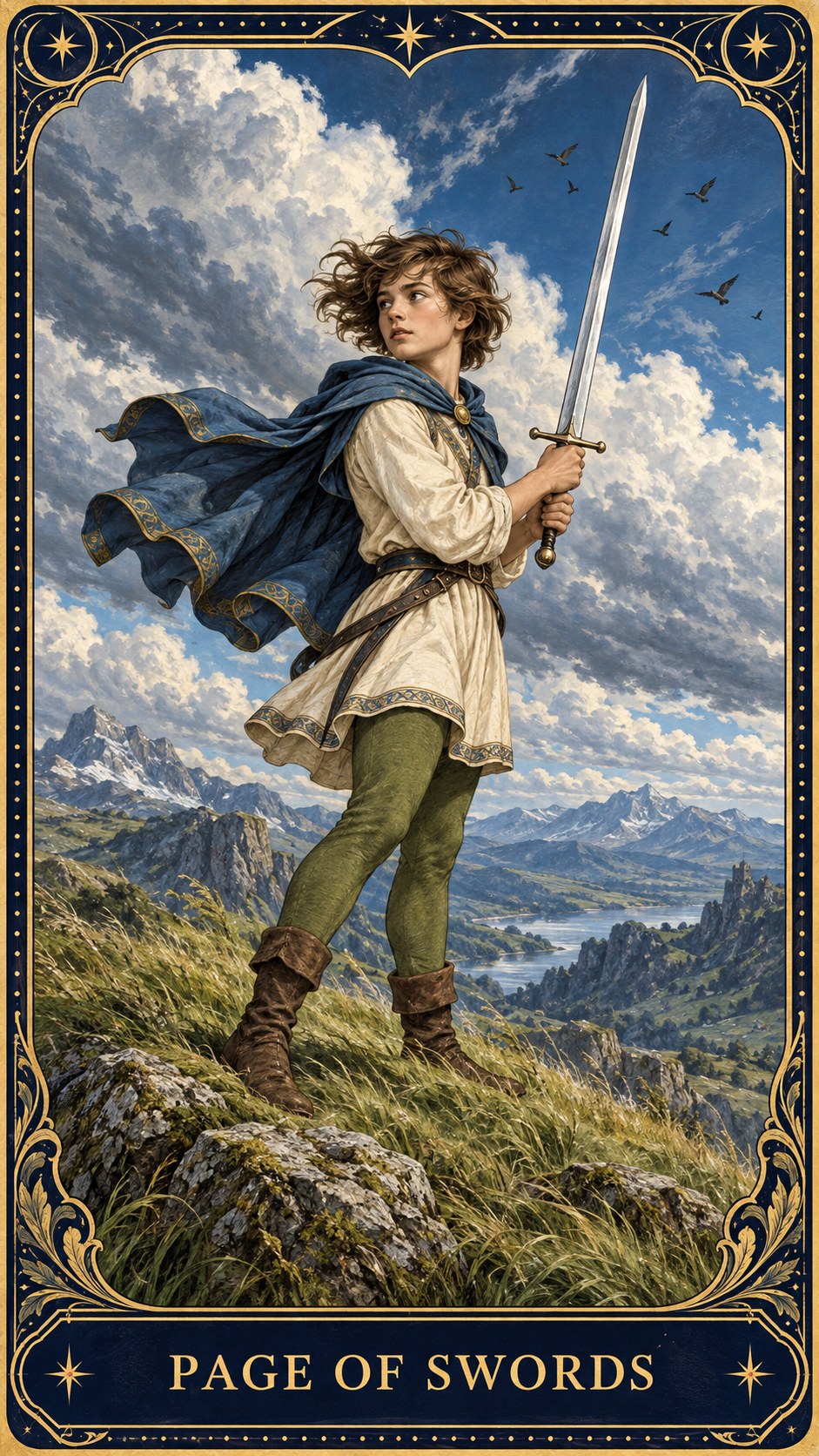
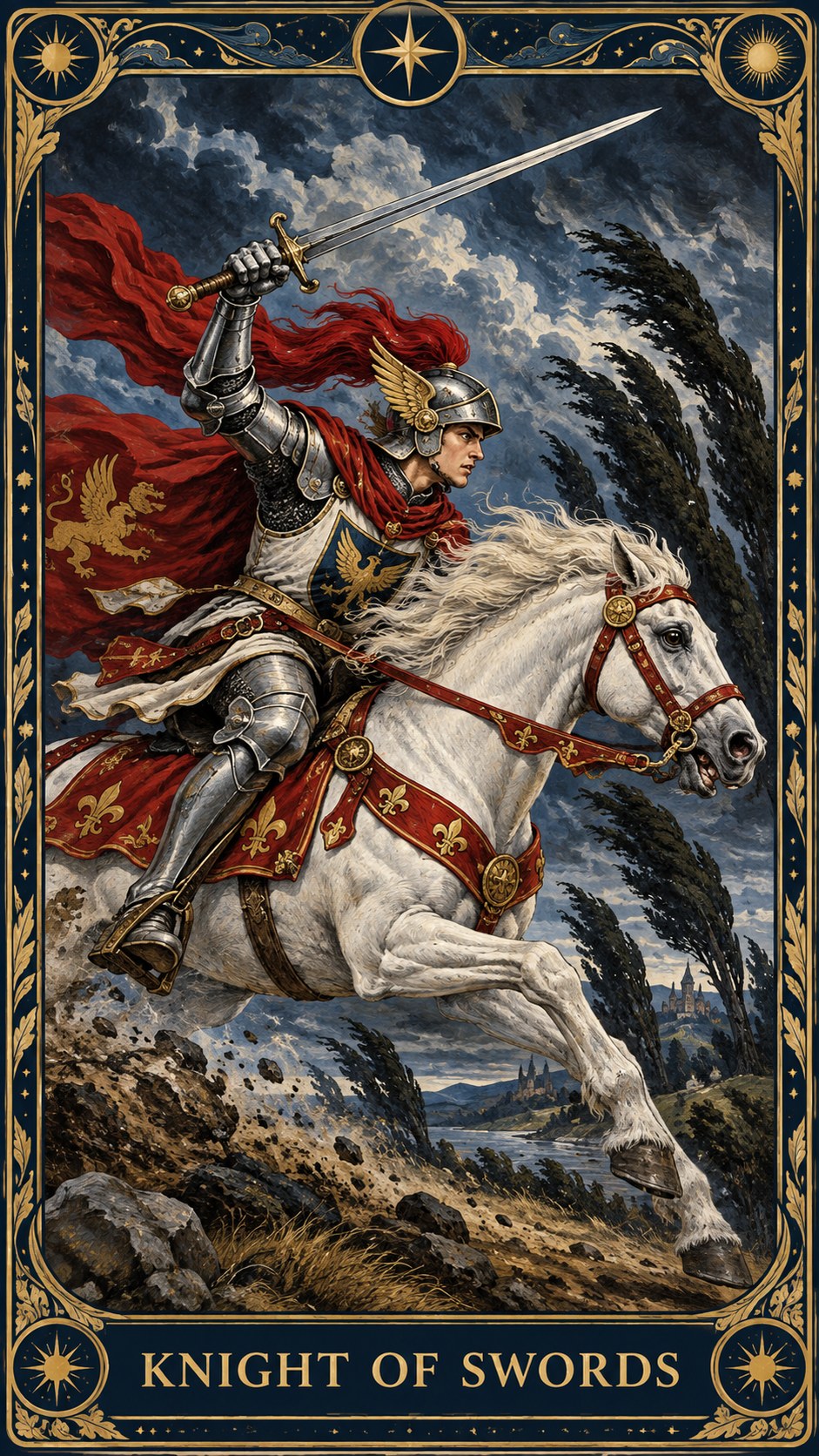
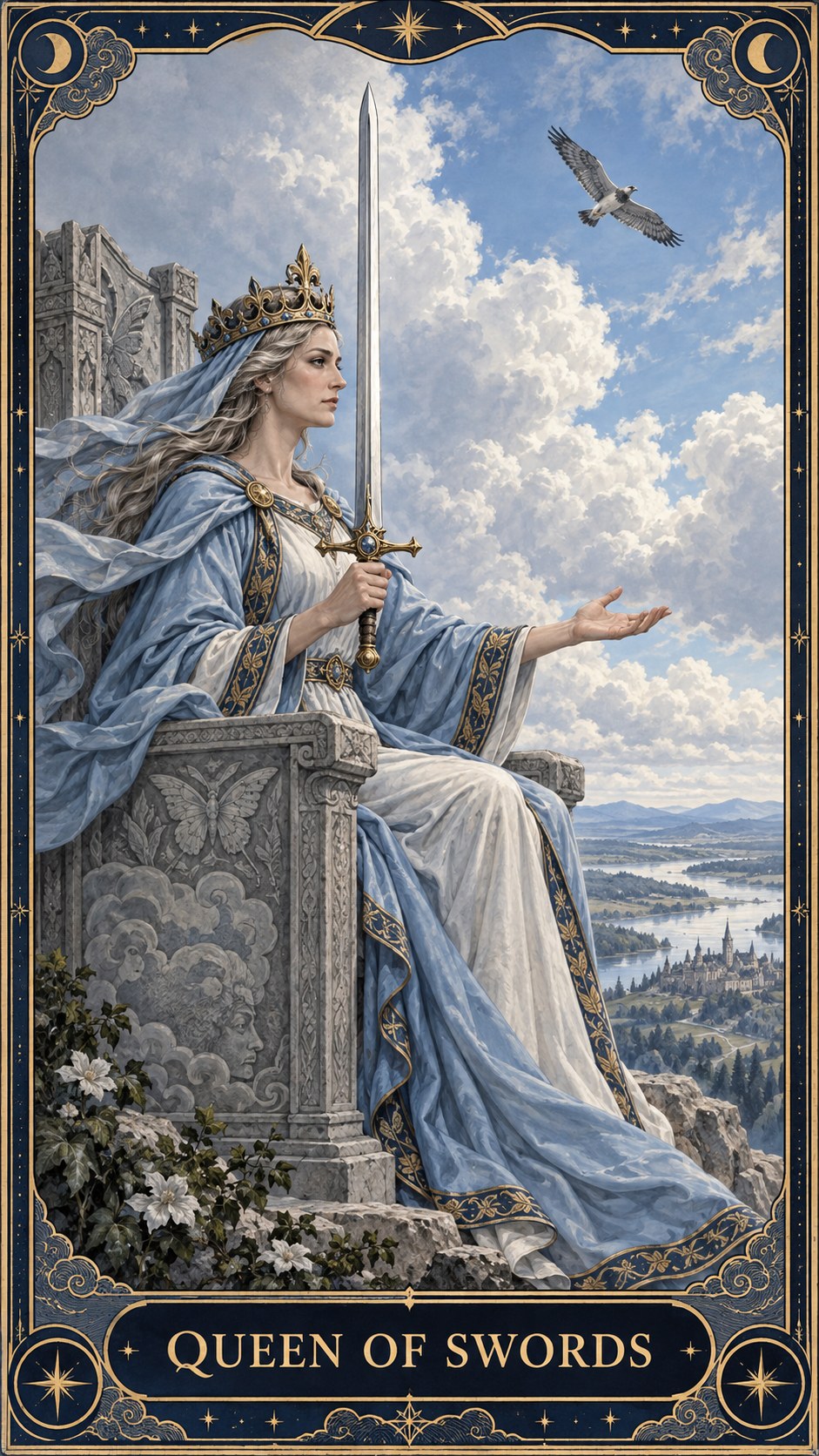
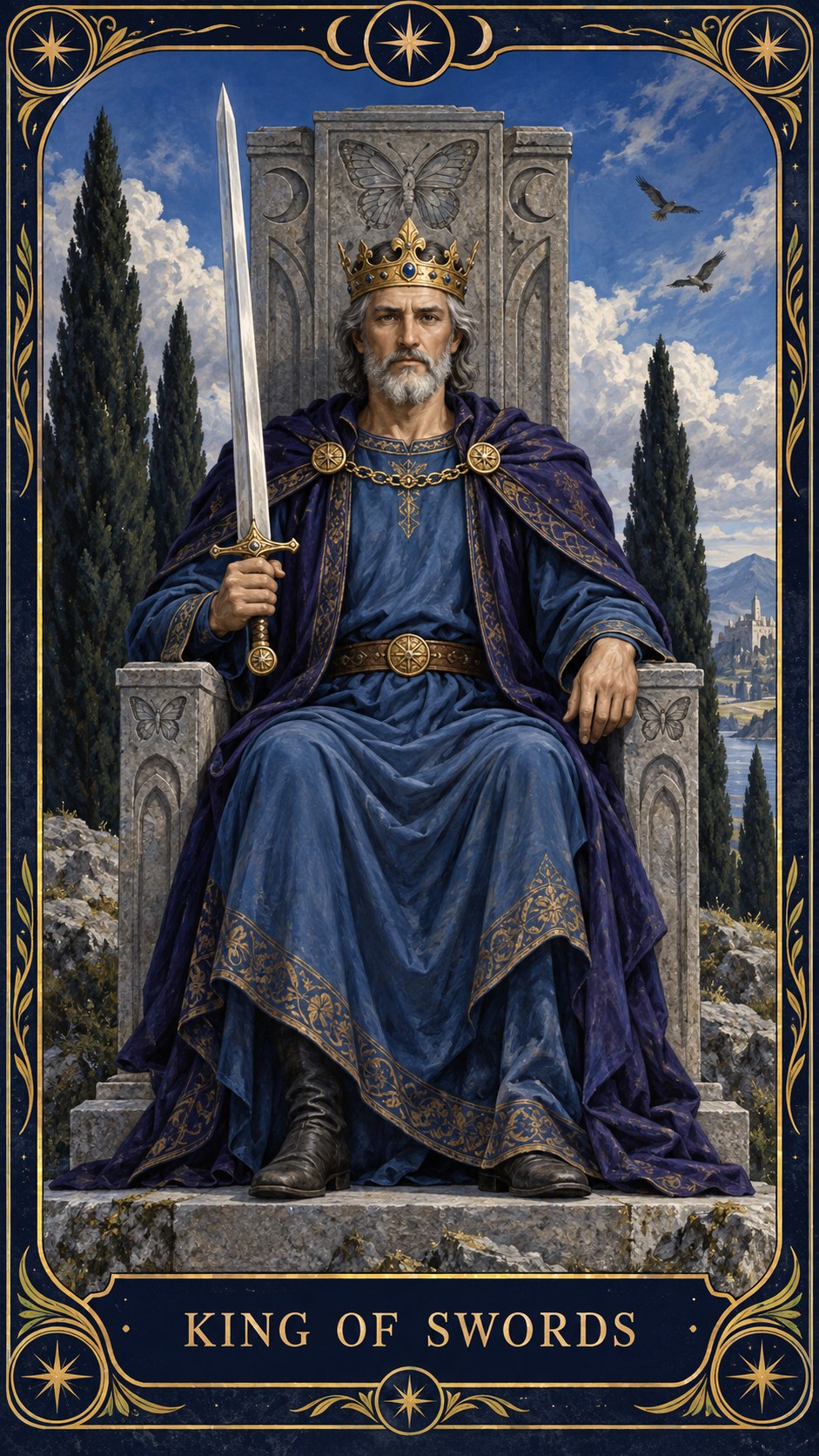
The ten numbered Swords trace a mental arc: a breakthrough idea (Ace) runs into stalemate or indecision (Two), then heartbreak (Three), enforced rest (Four), conflict won at a cost (Five), a difficult transition (Six), deception or quiet strategy (Seven), a feeling of being trapped (Eight), anxious sleeplessness (Nine), and finally a painful ending that also closes the chapter (Ten). The court cards are that same air in a person: a curious, alert beginner (Page), a fast, direct mover (Knight), someone sharp and honest (Queen), and a clear-headed authority (King).
How to read Swords without treating every card as bad news
Air describes thought, language, judgement, and conflict; the number shows how that process develops. A difficult image may describe a decision, a belief, or a conversation rather than a fixed event. Start by asking: what is known, what is assumed, and what still needs to be said?
When Swords are constructive
Clarity, honest naming, analysis, and firm boundaries are positive expressions of Air. Even a tense Sword can identify the exact problem that must be faced before movement becomes possible.
When Swords become a warning
Rumination, harsh speech, false certainty, and winning at any cost are the shadow side. Reversals do not simply mean the opposite; they may show an internalised conflict, delayed conversation, or a belief losing its grip.
Quick method: separate facts from interpretation, locate the decision or conversation, and phrase the reading as a choice—not an unavoidable prediction.
Numbered cards
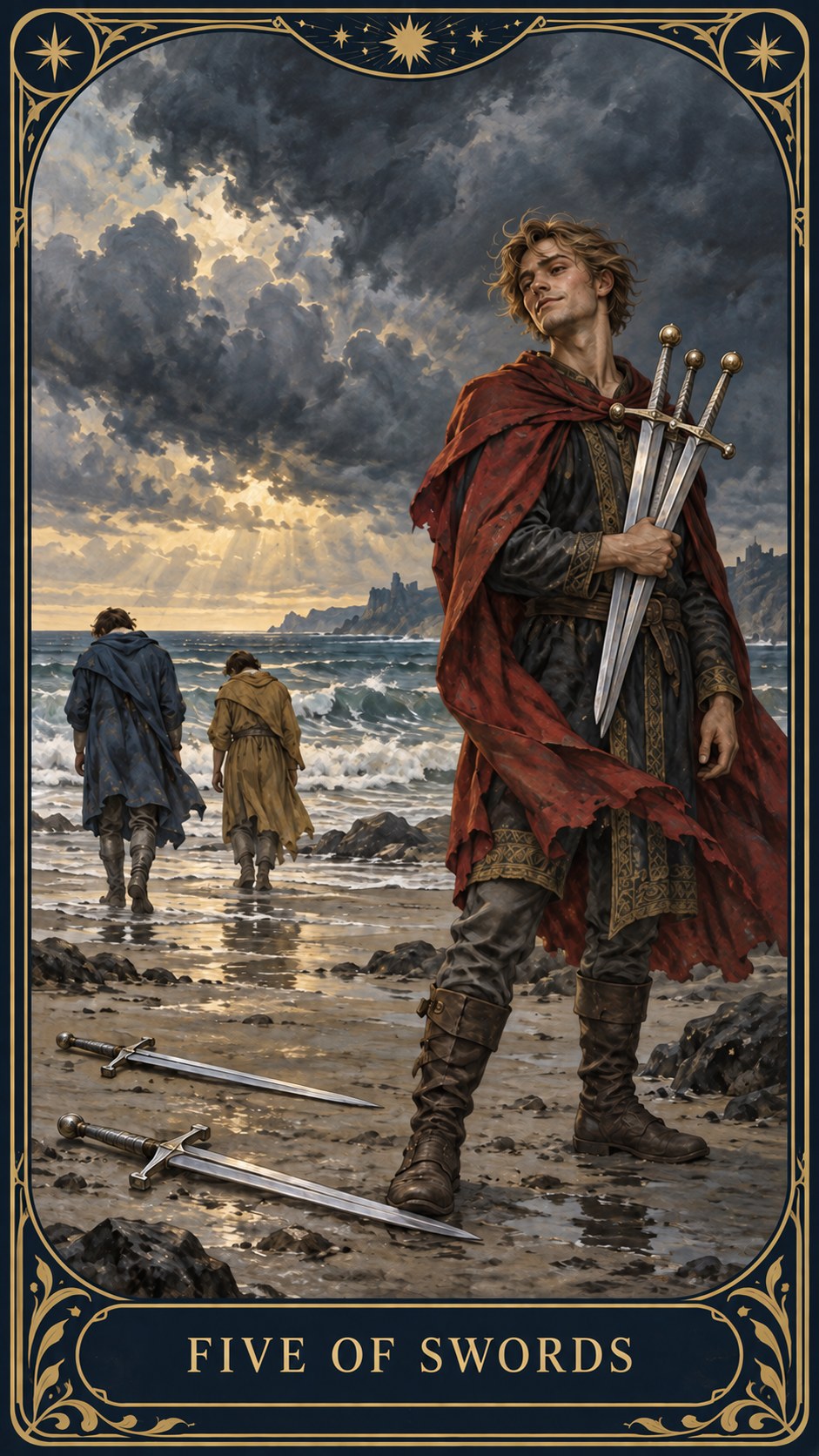
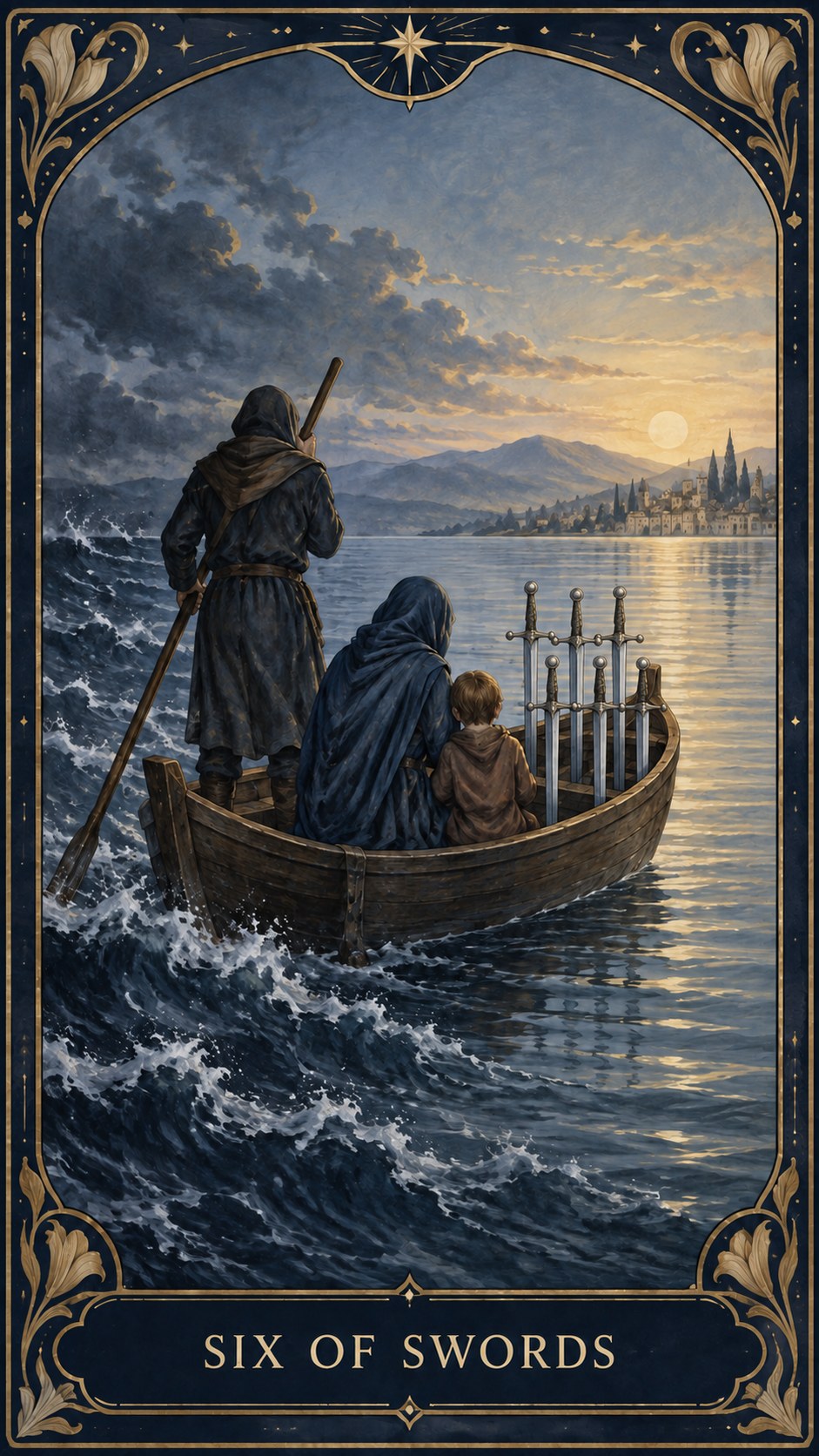
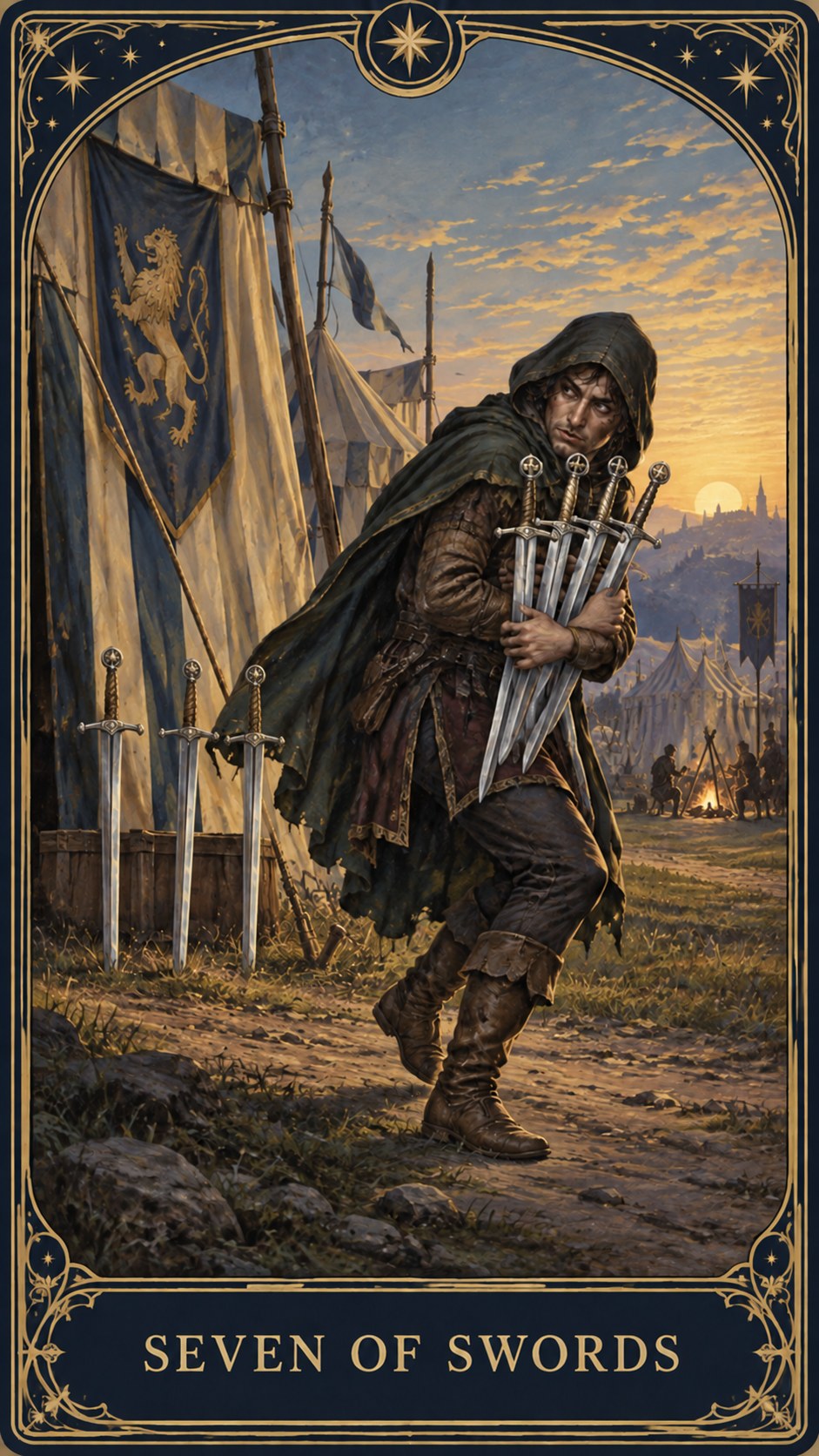
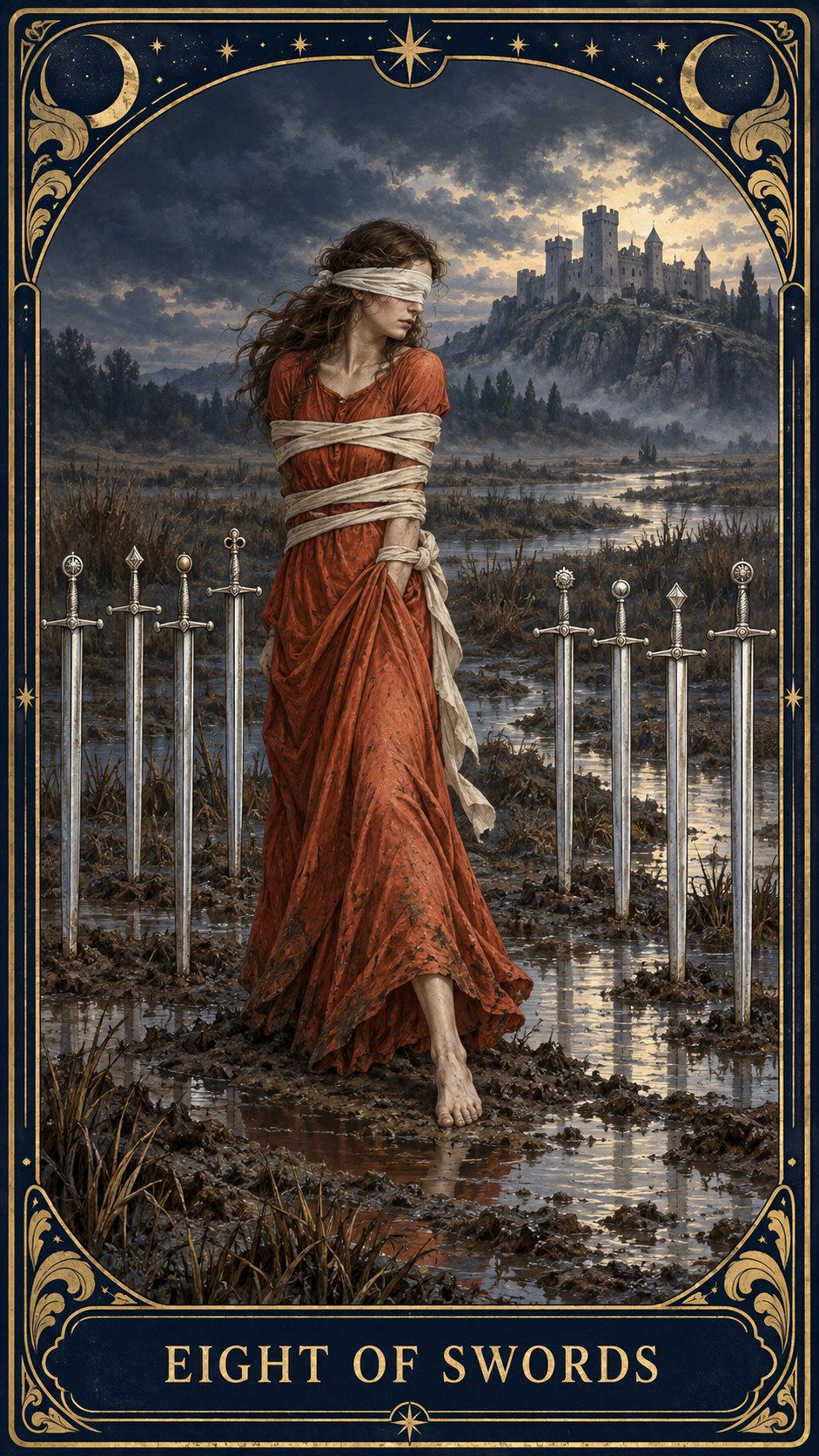
Court cards
Major Arcana
The 22 archetypal cards →
Minor Arcana
All 4 suits explained →
Full deck
All 78 cards →
Reading the suit of Swords in a spread
Swords belong to the element of Air and describe thought, communication, truth and conflict. When a spread contains several Swords, that is a hint about the type of question you are really asking: what you are thinking, what needs to be said clearly, and where a decision or a disagreement is waiting.
Swords are the suit of the mind. Their numbered cards run from a clear idea (Ace) through balance, heartbreak, rest, conflict, transition, defensiveness and strategy (Two to Seven), to isolation, anxiety, a painful ending and the end of a cycle (Eight to Ten). Court cards describe communication styles: a curious learner, a direct pursuer, a perceptive truth-teller and an authority who values fairness.
A common misreading to avoid
Swords often look severe, but they are not bad omens. The Three of Swords names grief honestly, and the Ten of Swords marks a definite ending after which something new can start. Read Swords for clarity: they point to the part of a situation that needs facing, naming or deciding.
Use the card list above to open each Sword card for its upright and reversed meanings, and compare it with the other suits in the Minor Arcana overview. For a reading with real positions, try a three-card spread.
Quick answers
What do Swords represent in Tarot?
Swords represent the element of Air and cover thought, communication, logic, truth and conflict.
Are Swords negative cards?
No. Many of them describe difficulty, but the purpose is to make a problem visible so that it can be handled.
How are Swords different from Cups?
Swords describe what you think and say, while Cups describe what you feel. The same situation can be read through both.